Web browser automation is a valuable skill in the toolkit of any modern developer. From automated testing to data extraction and form submissions, automation can significantly save time and effort. In this article, we'll delve into Playwright, a powerful library for automating browser navigation and interaction using Python.
Getting Started with Playwright
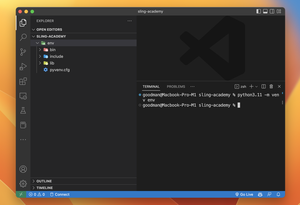
First, let's set up Playwright. To install it, you need to install the Playwright and Python bindings through pip:
pip install playwrightplaywright installThe above will install Playwright and the necessary browser binaries. Note that you'll need Python 3.7 or later.
Basic Use of Playwright
Playwright can programmatically launch any of the three major browser engines: Chromium, WebKit, and Firefox. Let’s start by launching a browser and navigating to a website:
from playwright.sync_api import sync_playwright

with sync_playwright() as p:
    browser = p.chromium.launch(headless=False)  # Launch browser
    page = browser.new_page()
    page.goto('https://www.example.com')    # Navigate to the page
    print(page.title())                      # Print page title
    browser.close()
The above code initiates a Chromium browser, launches a page directed to 'https://www.example.com', retrieves the page title, and finally closes the browser.
Headless vs. Non-headless Mode
By default, Playwright operates in headless mode, which runs without a visible UI. However, by setting headless=False within the launch() method, as shown above, you can see the browser in action. Headless mode is particularly useful for automated testing environments, reducing overhead.
Primary Page Interactions
Playwright allows you to interact with web pages extensively. Here are some primitives:
# Example of filling a form
page.fill('#username', 'your_username')
page.fill('#password', 'your_password')
page.click('button[type="submit"]')
With these methods, you can simulate user actions such as clicking buttons or filling forms. The query selector uses common CSS rules, thus making the script robust and adaptable.
Waiting for Elements
In automated interactions, timing is everything. Playwright provides built-in solutions such as waiting for elements to be visible or clickable:
# Wait for an element to become visible
element = page.wait_for_selector('#result', state='visible')
print(element.text_content())
This will pause the execution until the element with the ID #result becomes visible, ensuring that your script interacts with elements after they have fully loaded.
Extracting Data
Data extraction from web pages for purposes like scraping is quite straightforward. You can utilize the following technique:
# Get text content of list items
items = page.query_selector_all('.item')
for item in items:
    print(item.text_content())
This simple script captures all list items with the class .item, prints each item's text content, thereby facilitating data scraping from a structured format within a webpage.
Conclusion
Playwright is a flexible, comprehensive tool for browser automation that eases simulating user interactions and extracting content efficiently. Its broad capabilities make it ideal not just for web scraping, but for carrying out vast arrays of web-based interactions, such as repetitive form submissions, browser testing, and multi-page navigation. As you master Playwright's nuances, you enhance both the accuracy and speed of your automation tasks.