Continuous Integration (CI) is an essential practice in modern software development that allows teams to automate workflows and ensure code quality. When it comes to end-to-end testing in web applications, Playwright is a powerful tool that offers reliable and fast testing capabilities. In this article, we will explore how to integrate Playwright tests into a Python project with a CI/CD pipeline, ensuring that every code change is validated before being merged.
Getting Started with Playwright in Python
Before setting up CI for your Playwright tests, we need to ensure that Playwright is correctly set up in your Python project.
pip install playwright
python -m playwright install
This installs the Playwright library and downloads the browser binaries necessary for testing. Next, let's write a simple test script to verify our setup:
from playwright.sync_api import sync_playwright

def test_basic_example():
    with sync_playwright() as p:
        browser = p.chromium.launch()
        page = browser.new_page()
        page.goto("https://example.com")
        assert page.title() == "Example Domain"
        browser.close()
Save this as test_example.py. This script launches a Chromium browser, navigates to a website, and checks if the title matches the expected string.
Setting up CI with GitHub Actions
GitHub Actions is a popular CI/CD tool that integrates seamlessly with GitHub repositories. To integrate Playwright tests using GitHub Actions, we'll create a workflow file.
name: Playwright Tests

on: [push, pull_request]

jobs:
  test:
    runs-on: ubuntu-latest

    steps:
    - uses: actions/checkout@v2
    - name: Set up Python
      uses: actions/setup-python@v2
      with:
        python-version: '3.x'
    - name: Install dependencies
      run: |
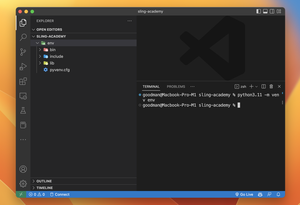
        python -m venv venv
        source venv/bin/activate
        pip install playwright
        python -m playwright install
    - name: Run Playwright tests
      run: |
        source venv/bin/activate
        pytest
This script defines a GitHub Actions workflow named "Playwright Tests" that runs on every push or pull request. It checks out the code, sets up Python, installs Playwright, and runs the tests using pytest. Ensure that your tests are placed in a directory recognized by pytest, typically named tests/.
Writing Robust Playwright Tests
For CI/CD to provide value, tests must be reliable and cover important aspects of your application. Here's how you can structure more effective tests using Playwright:
- Use page objects, which encourage reusable and maintainable code.
- Utilize built-in assertions provided by Playwright, such as checking for text, visibility, and element states.
- Think about strategic test scenarios that reflect key user interactions and functionality.
Here’s an example using assertions in Playwright:
def test_form_submission():
    with sync_playwright() as p:
        browser = p.chromium.launch(headless=False)
        page = browser.new_page()
        page.goto("https://example.com/form")
        page.fill("#name", "John Doe")
        page.click("#submit-button")
        page.wait_for_selector("#success-message")
        assert page.inner_text("#success-message") == "Form submitted successfully"
        browser.close()
Conclusion
Integrating Playwright with a CI pipeline significantly enhances test automation reliability. By running your Python tests in the cloud with every commit, risky changes are detected early, helping maintain software quality. Leveraging continuous integration with testing frameworks like Playwright can transform the way teams address software development, ensuring quicker, safer, and more robust software releases.