Understanding numpy.insert() function (4 examples)
Updated: Mar 02, 2024
Overview The Numpy library in Python is a cornerstone for the scientific computation ecosystem, providing efficient array operations. One of the versatile tools within this library is the numpy.insert() function, which allows for the......
Using numpy.append() function (5 examples)
Updated: Mar 02, 2024
The numpy library is a cornerstone of the data science and numerical computing world in Python. One of its fundamental operations is appending elements or arrays. In this tutorial, we’ll explore the numpy.append() function through......
Using numpy.trim_zeros() function (4 examples)
Updated: Mar 02, 2024
Introduction In the world of Python programming, the numpy library is a fundamental tool for numerical computations. It provides support for large, multi-dimensional arrays and matrices, along with a collection of high-level......
Using numpy.asanyarray() function (4 examples)
Updated: Mar 02, 2024
Introduction The numpy.asanyarray() function is an essential tool in NumPy, a core library for numerical computing in Python. This function helps convert input into an array if it is not already an array. What makes asanyarray......
NumPy: How to create Vandermonde matrix (4 examples)
Updated: Mar 02, 2024
In this tutorial, we dive into the world of linear algebra with a focus on generating Vandermonde matrices using NumPy, a fundamental package for scientific computing in Python. Vandermonde matrices have diverse applications, including......
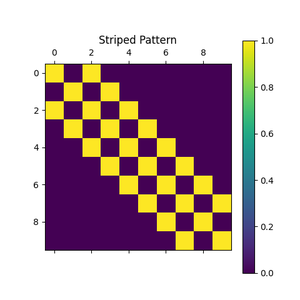
Using numpy.eye() function (4 examples)
Updated: Mar 02, 2024
The numpy.eye() function is an integral part of the NumPy library, aiding in the creation of identity matrices. This guide presents a comprehensive understanding of how to utilize the numpy.eye() function effectively, demonstrated through......
Explore numpy.identity() function (4 examples)
Updated: Mar 02, 2024
The numpy.identity() function is a key tool in numerical analysis and linear algebra operations when working with Python’s Numpy library. This powerful function generates square identity matrices efficiently, which are crucial in......
Understanding numpy.empty_like() function (3 examples)
Updated: Mar 02, 2024
Introduction NumPy is an essential library in the Python ecosystem for numerical computing. One of its powerful functions, numpy.empty_like(), is particularly useful for creating uninitialized arrays with the same shape and data type......
Using numpy.is_busday() function (4 examples)
Updated: Mar 02, 2024
Understanding how to navigate through dates and determine business days plays a vital role in financial analytics, reporting, and data preprocessing tasks in Python. The NumPy library, particularly its is_busday() function, offers an......
Using numpy.datetime_data() function (3 examples)
Updated: Mar 02, 2024
Introduction The numpy.datetime_data() function is a crucial tool in Python’s NumPy library for handling and manipulating date and time data. This guide delves into the essentials of using this function, supported by practical......
NumPy – Using ufunc.identity attribute (5 examples)
Updated: Mar 02, 2024
Understanding NumPy’s ufunc.identity attribute can greatly enhance your ability to work with universal functions (ufuncs) efficiently. In this comprehensive guide, we will explore the concept of the identity attribute in universal......
NumPy – What is ufuc.types attribute? (4 examples)
Updated: Mar 02, 2024
NumPy, an essential library for numerical computing in Python, enhances array operations’ efficiency and capability. Among its plethora of features, universal functions or ufuncs stand out. Ufuncs are vectorized functions operating......