Explaining numpy.promote_types() function (5 examples)
Updated: Feb 28, 2024
Introduction numpy.promote_types() is a little-known but powerful function within NumPy, a cornerstone library for numerical computing in Python. This function is designed to determine the smallest data type that can safely and......
Using numpy.can_cast() function (8 examples)
Updated: Feb 28, 2024
Introduction NumPy is a fundamental package for scientific computing in Python. It provides a high-performance multidimensional array object and tools for working with these arrays. The numpy.can_cast() function is an essential part of......

NumPy – Using random.Generator.weibull() method (5 examples)
Updated: Feb 28, 2024
Introduction In this tutorial, we’re going to dive into the random.Generator.weibull() method provided by NumPy, a core library for numeric and scientific computing in Python. The Weibull distribution is a continuous probability......
Understanding random.Generator.wald() method in NumPy (4 examples)
Updated: Feb 28, 2024
Introduction In the realm of scientific computing, NumPy stands as a cornerstone library for the Python programming language, offering extensive mathematical functions, random number generation capabilities, and more. Within......
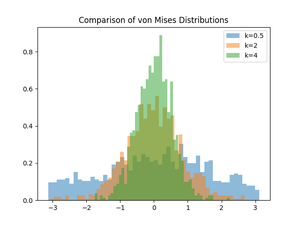
Using random.Generator.vonmises() method in NumPy (5 examples)
Updated: Feb 28, 2024
Introduction In the realm of data science, Python’s NumPy library stands as a cornerstone, providing extensive capabilities for numerical computations. An intriguing part of this library is the random.Generator.vonmises() method,......
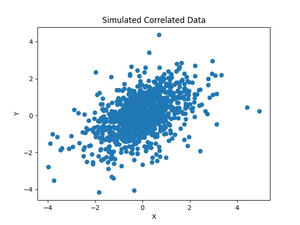
NumPy – Using random.Generator.standard_t() method (4 examples)
Updated: Feb 28, 2024
Introduction NumPy is a cornerstone library in the Python ecosystem, extensively used for numerical computing. It provides a high-performance multidimensional array object, and tools for working with these arrays. An important subset......
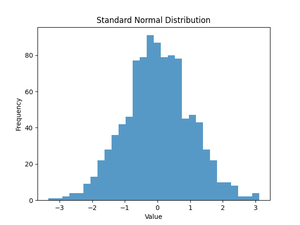
Using random.Generator.standard_normal() method in NumPy (4 examples)
Updated: Feb 28, 2024
Introduction NumPy is an essential library in the Python ecosystem for scientific computing, and its random module is a powerhouse for generating random data. Among its many functions, the random.Generator.standard_normal() method is......
Using random.Generator.standard_gamma() method in NumPy (5 examples)
Updated: Feb 28, 2024
Introduction Random sampling is an integral part of data science, simulations, and statistical modeling. NumPy, a cornerstone library for numerical computations in Python, offers a vast array of functions for generating random data.......
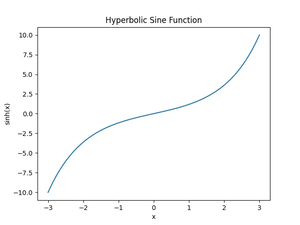
NumPy – Using np.sinh() and np.arcsinh() functions (4 examples)
Updated: Feb 28, 2024
Introduction NumPy is a fundamental package for scientific computing in Python, providing support for arrays, matrices, and high-level mathematical functions to operate on these data structures. Among its numerous capabilities, NumPy......
NumPy TypeError: return arrays must be of ArrayType
Updated: Feb 28, 2024
Understanding the Problem When working with NumPy, a popular Python library for numerical computations, users may encounter the ‘TypeError: return arrays must be of ArrayType‘. This error typically indicates an issue with......
NumPy – Understanding tan(), arctan(), and arctan2() functions (6 examples)
Updated: Feb 28, 2024
Introduction NumPy is a fundamental package for scientific computing in Python, offering a comprehensive mathematical functions library, multi-dimensional array objects, and tools for integrating C/C++ and Fortran code. Among its broad......
NumPy – Using conj() and conjugate() functions (4 examples)
Updated: Feb 28, 2024
Understanding complex numbers and operations on them is crucial in various scientific and engineering applications. NumPy, a fundamental package for numerical computing in Python, offers a straightforward and efficient way to work with......